LacusOrb is a family of autonomous, solar-powered monitoring buoys for long-term, unattended deployment in lakes, rivers, coastal waters, ports, and aquaculture sites. The compact LacusOrb150 is a three-parameter platform (a primary sensor plus temperature and salinity) for distributed sensing; the larger LacusOrb300 adds multi-parameter sensing, more on-board compute, battery capacity up to 500 Wh, and an adjustable ballast system for waterline control. Both charge from solar (wind or hybrid optional), position by GPS, process data at the edge, and talk to the cloud in both directions over LTE, NB-IoT, LoRaWAN, or Iridium satellite. Beyond water quality, LacusOrb works as a remote Modbus-to-cloud gateway and control node — and the LacusOrb300 can carry a compact scanning imaging sonar for continuous, unattended monitoring of critical subsea structures.
- Self-powered operationRuns autonomously on solar, with wind or hybrid options and an optional 5–25 VDC external charge for shaded or harsh sites.
- Two sizesLacusOrb150 for compact, distributed three-parameter sensing; LacusOrb300 for multi-parameter monitoring, more compute, and longer endurance.
- Modular sensor payloadSwappable water-quality sensors — pH, salinity, dissolved oxygen, turbidity, nitrate, chlorine, algae, oil-in-water, TDS, BOD, and more.
- Multi-network connectivityLTE, NB-IoT, LoRaWAN, or Iridium satellite — selected to suit the site and the data rate you need.
- Edge processing & alertsOn-board compute analyses data and sends threshold-based, event-driven alerts to cut bandwidth; the LacusOrb300 supports higher-performance edge-AI modules.
- High-capacity power (300)LacusOrb300 battery configurations up to 500 Wh for higher-power sensors, communications, and extended operation.
- Adjustable ballast (300)An optional ballast system on the LacusOrb300 sets and holds the operating waterline to suit the deployment.
- Continuous structure monitoring (300)The LacusOrb300 can carry a compact mechanical scanning imaging sonar — a self-powered, unattended station that images subsea structures (quay walls, piers, pilings, foundations, intakes) around the clock and streams the data to the cloud.
- Modbus-to-cloud gatewayRS-485 / Modbus devices connect directly, and onboard relays drive external systems (pumps, lights, actuators) — remote monitoring and control in one node.
- Built for the long haulMarine-grade housing, self-cleaning to reduce fouling, a secure two-way dashboard, and OTA firmware updates — designed for unattended deployment.
Sensor support
- Temperature
- pH
- Salinity
- Conductivity
- TDS
- Dissolved Oxygen
- ORP
- Turbidity
- Chlorine
- Nitrate
- Nitrite
- Fluoride
- Potassium
- Blue-Green Algae
- BOD
- Oil-in-Water
- Custom on request
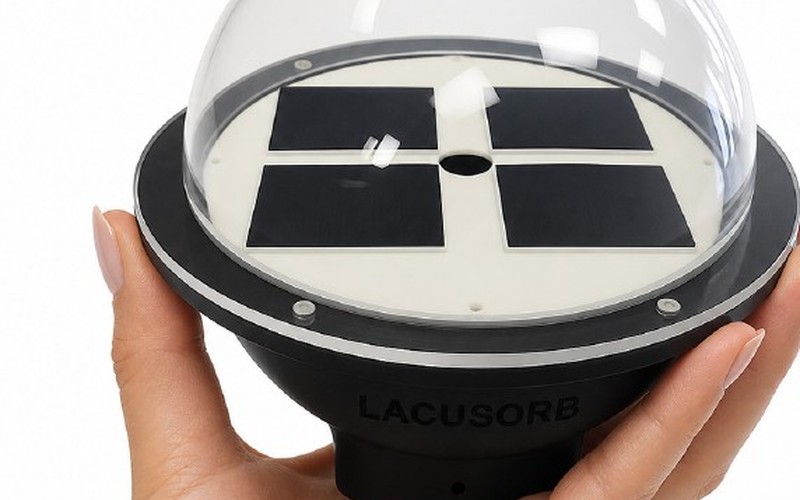
- Sizes
- 150 mm / 300 mm
- Power
- Solar (wind / hybrid optional)
- External charge
- 5–25 VDC (optional)
- Battery
- Lithium-ion; up to 500 Wh (LacusOrb300)
- Processor
- ARM Cortex-M4 / M7; optional edge-AI modules (300)
- Connectivity
- LTE / NB-IoT / LoRaWAN / Iridium
- Interface
- RS-485 / Modbus RTU
- Storage
- 0 / 500 MB / 1 / 2 TB
- Ballast
- Adjustable waterline control (300, optional)
- Sonar payload
- Scanning imaging sonar (300, optional)
- Operating range
- -20 to 60 °C (shutdown below 0 °C, programmable)
Specifications subject to change without notice.
FAQ
Monitoring buoy FAQs
What is the difference between LacusOrb150 and LacusOrb300?
The 150 is a compact three-parameter buoy (a primary sensor plus temperature and salinity) for distributed sensing. The 300 is larger: multi-parameter sensing, more compute, battery up to 500 Wh, an adjustable ballast system, and a scanning-sonar option.
How is LacusOrb powered and how long does it run?
It charges from solar (wind or hybrid optional) into a lithium-ion battery — up to 500 Wh on the 300 — for long-term unattended operation. An optional 5–25 VDC external charge input covers shaded or harsh sites.
How does it send data?
Bidirectional cloud over LTE, NB-IoT, LoRaWAN, or Iridium satellite, selected to suit the site. Edge processing and event-based alerts keep data usage low.
What can it measure?
A modular payload of water-quality sensors — pH, salinity, dissolved oxygen, turbidity, nitrate, chlorine, algae, oil-in-water, TDS, BOD, and more — selected per deployment; custom sensors on request.
Can it monitor a structure continuously?
Yes. The LacusOrb300 can carry a compact scanning imaging sonar, so a self-powered buoy images and monitors a critical subsea structure around the clock and streams the data to the cloud — no divers or vessel on station.
Can it control external equipment?
Yes. An RS-485 / Modbus interface and onboard relays let it act as a Modbus-to-cloud gateway and drive external systems such as pumps, lights, and actuators from the dashboard.
Also in the lineup
Related products
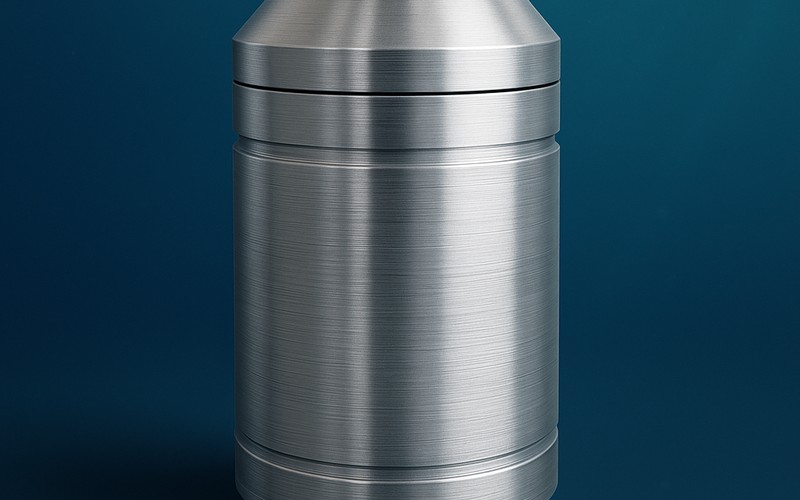
ANIK Subsea Battery Packs
Rechargeable subsea battery packs, 100 Wh to 1.8 kWh, that charge in place and report their own health — for seabed instruments, hydrophones, CTDs and moorings. Depth-rated to 6000 m.
View product →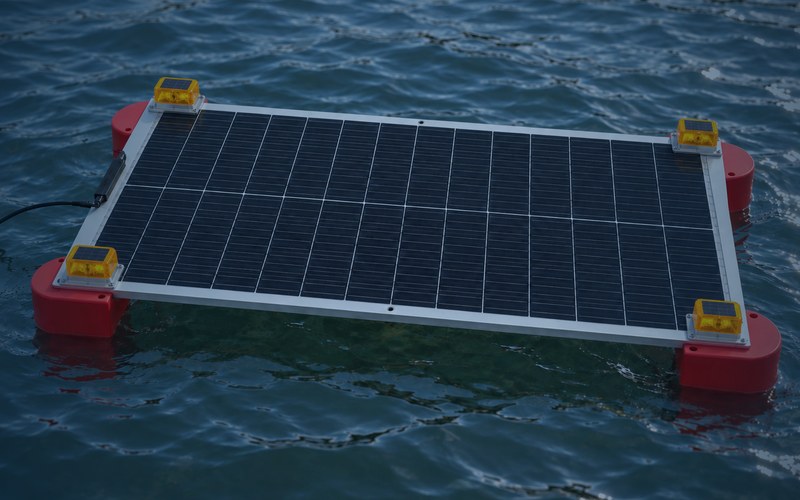
NOR Floating Solar Panel
NOR floating solar panel recharges ANIK subsea battery packs in place — 100 W or 200 W, marine-encapsulated, with optional remote battery monitoring. Longer deployments, smaller batteries.
View product →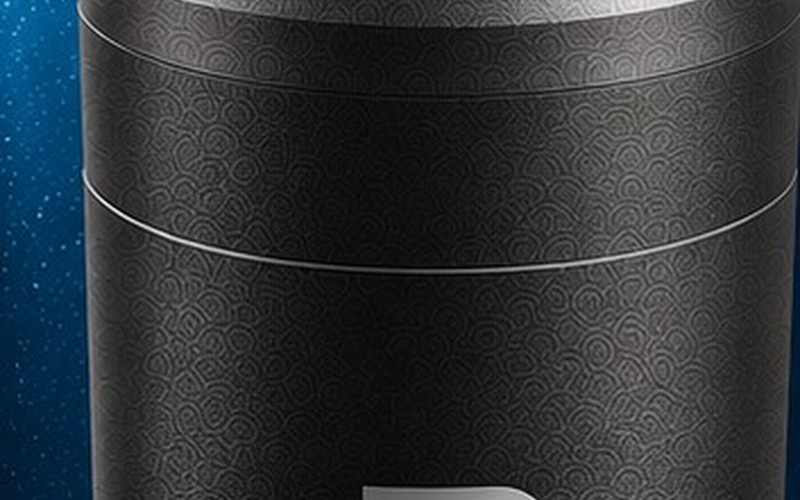
AVIN Subsea Edge AI & Data Logger
AVIN is a subsea edge-AI computer and advanced data logger: a managed PoE sensor hub that records time-synchronised acoustic, video and sensor data to NVMe (up to 10 TB) and runs AI / ML at the edge. 2 / 4 / 8 Gigabit ports, depth-rated to 6000 m.
View product →
SAMIN Subsea Smart eFuse
SAMIN subsea smart eFuse — a resettable, programmable, remote-controlled electronic fuse with predictive monitoring for subsea machinery. Up to 850 VDC and 300 A, depth-rated to 4000 m.
View product →
Marinus-DC Subsea Step-Down Converters
Marinus-DC subsea step-down converters take a 400 or 800 VDC bus down to isolated 24 or 48 VDC for auxiliary electronics, control systems, and battery charging — up to 75 A, 4000 V isolation, depth-rated to 6000 m.
View product →
VoltMaris Subsea DC-AC Inverters
VoltMaris subsea DC-AC inverters deliver clean pure-sine AC (115 / 230 VAC, 50 / 60 Hz) from a 12 / 24 / 48 VDC bus or battery — 250 to 1500 W, galvanically isolated, depth-rated to 2000 m. Run AC survey instruments from an ROV bus or an ANIK pack.
View product →
DeepTorque Subsea Motor Drivers
DeepTorque subsea motor drivers for underwater propulsion, thrusters, pumps, winches and actuators — low-voltage, 400 VDC and 800 VDC, up to 20 kW and 150 Arms, depth-rated to 2000 m.
View product →